16 September 2026 · 7 min
Case study: Rökeriet i Åhus — website, web shop and restaurant in one
The smokehouse between Åhus and Yngsjö smokes everything itself, with a farm shop, a restaurant and catering on the same farm. The old website was a WordPress install with the menus as PDFs. The new one is shop, restaurant and admin panel in one, in Swedish, English and German — built in four weeks and run by me. Here is what they needed, what I built, and how it works.
The starting point
Three businesses in one — fish counter, restaurant and catering — and a website that could not keep up. Prices, Latin names and catch details lived in the staff’s heads, the menus were PDFs, and every change needed someone who knew WordPress. At the same time the old address had hundreds of pages Google knew about, and none of them could be allowed to die in the move.
What I built
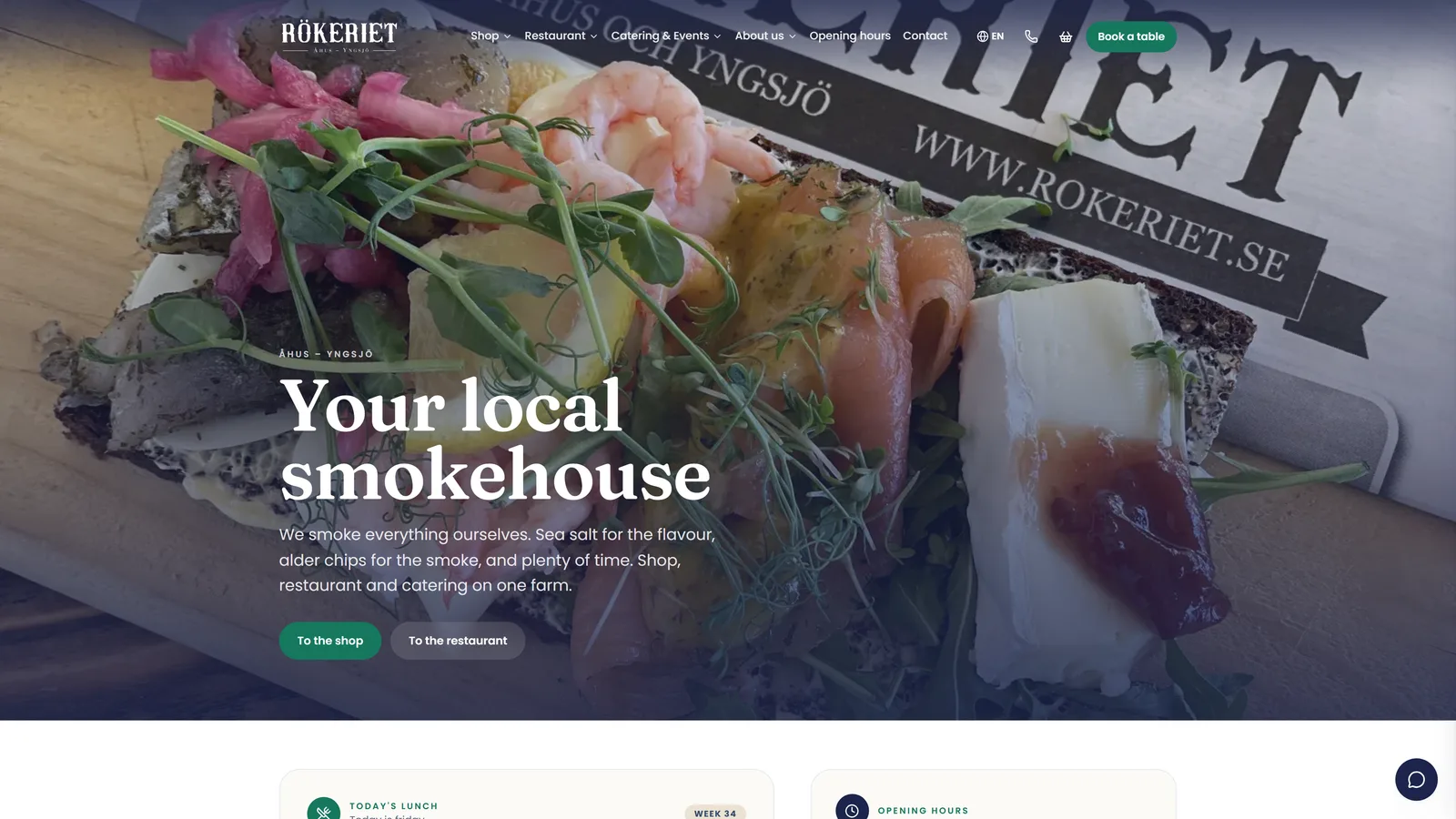
- A site in three languages — 28 page templates in Swedish, English and German: shop, restaurant, catering and events, gallery, groups, jobs, news, newsletter and a page of its own about the salmon.
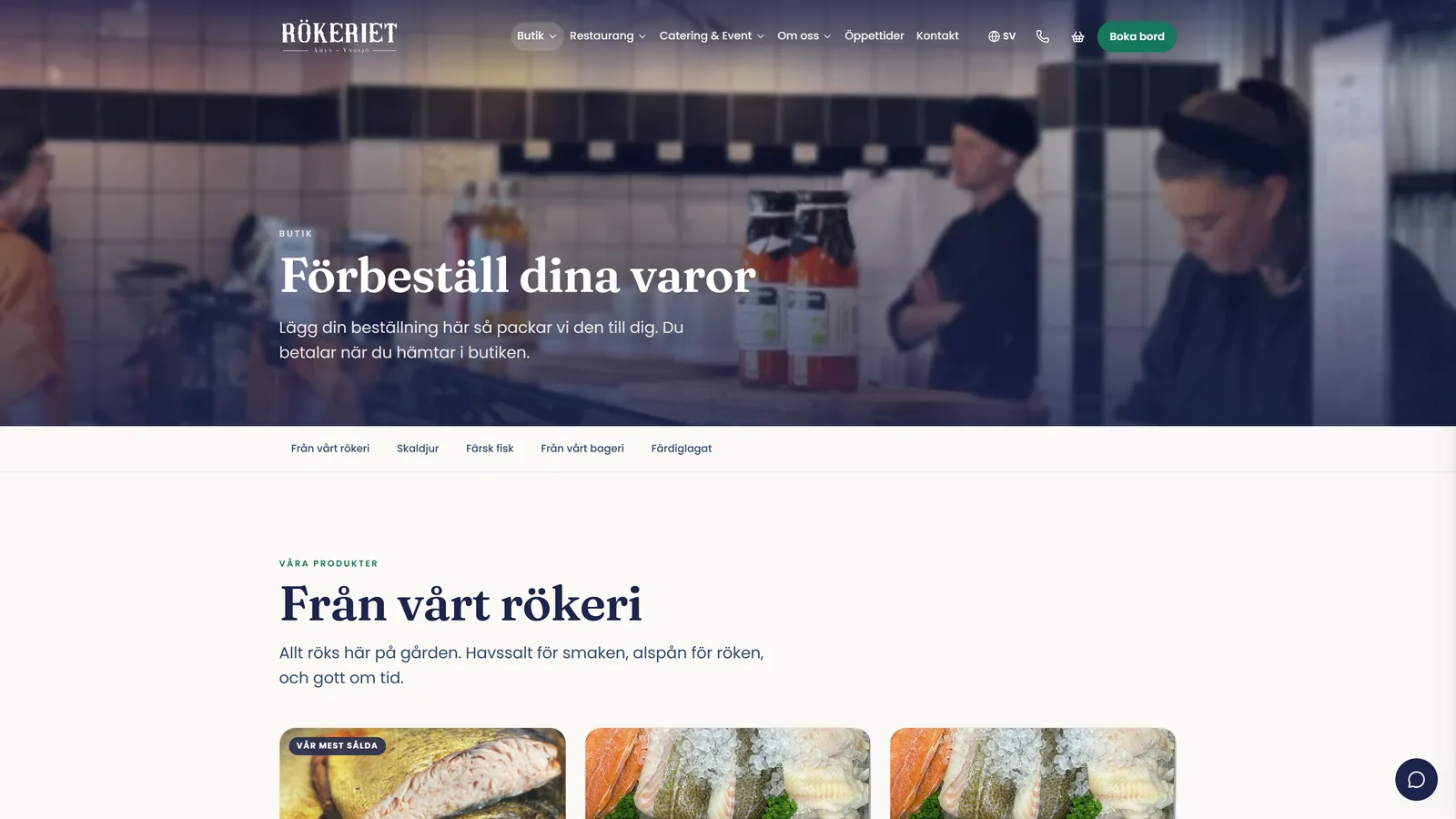
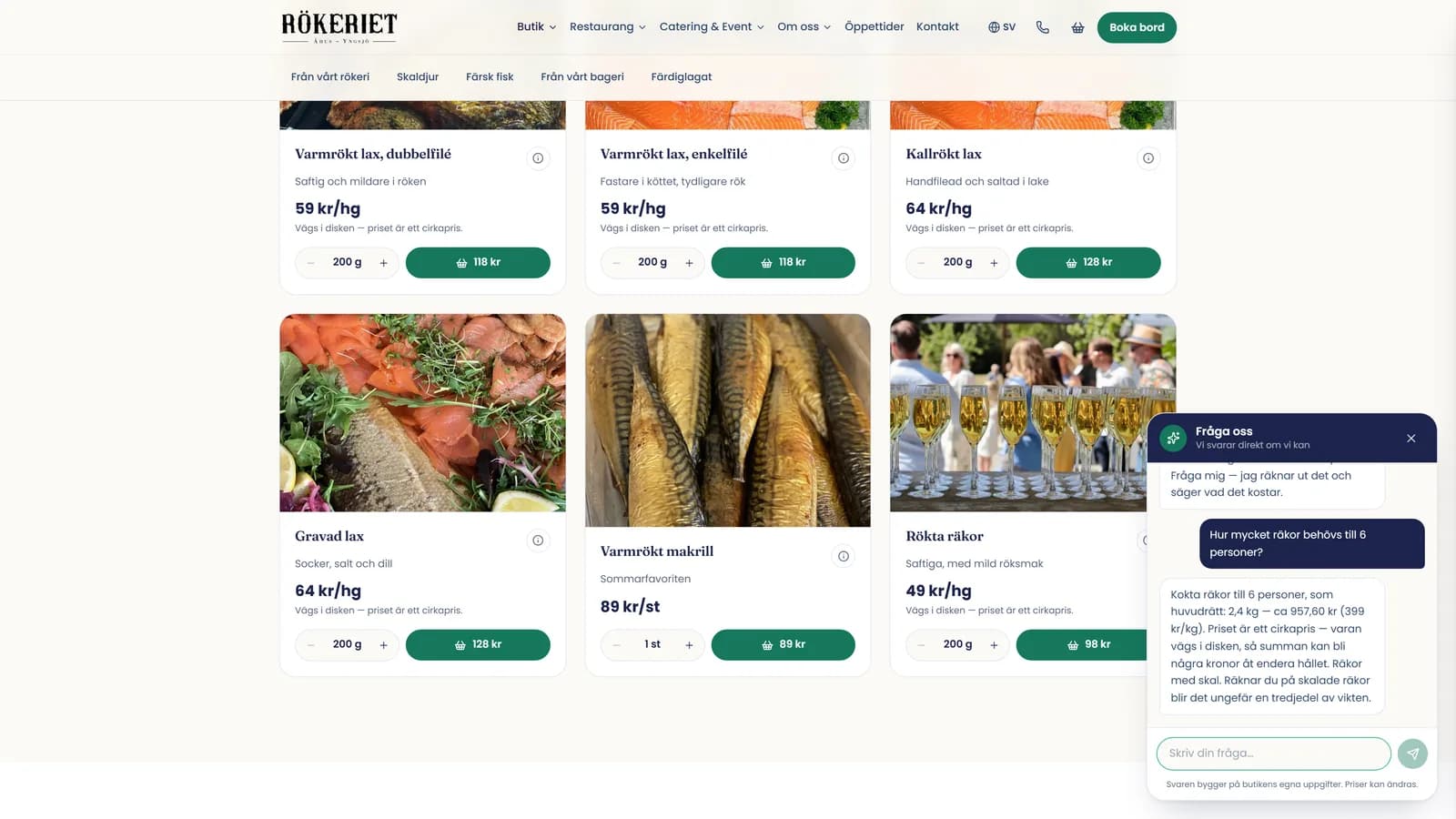
- A web shop without a payment gateway. The customer pre-orders, the fish is weighed at the counter and paid for at pickup. Weighed items show an approximate price, every product card flips over for origin, catch method and Latin name, and the customer picks a pickup day and time.
- A restaurant with a lunch that switches itself. Four menus straight on the page, no PDFs. The daily lunch changes automatically by weekday, and the kitchen plans lunch weeks ahead and activates a whole week at a time.
- A weekly newsletter the AI drafts from the week’s real content — range, lunch, events, news — after a few lines from the owner. Always a preview and a mandatory test email before anything goes out.
- Catering enquiries with a price range calculated from the smokehouse’s own past bookings, and a draft reply.
- 252 redirects from the old site, so nothing Google had already found became a dead link.
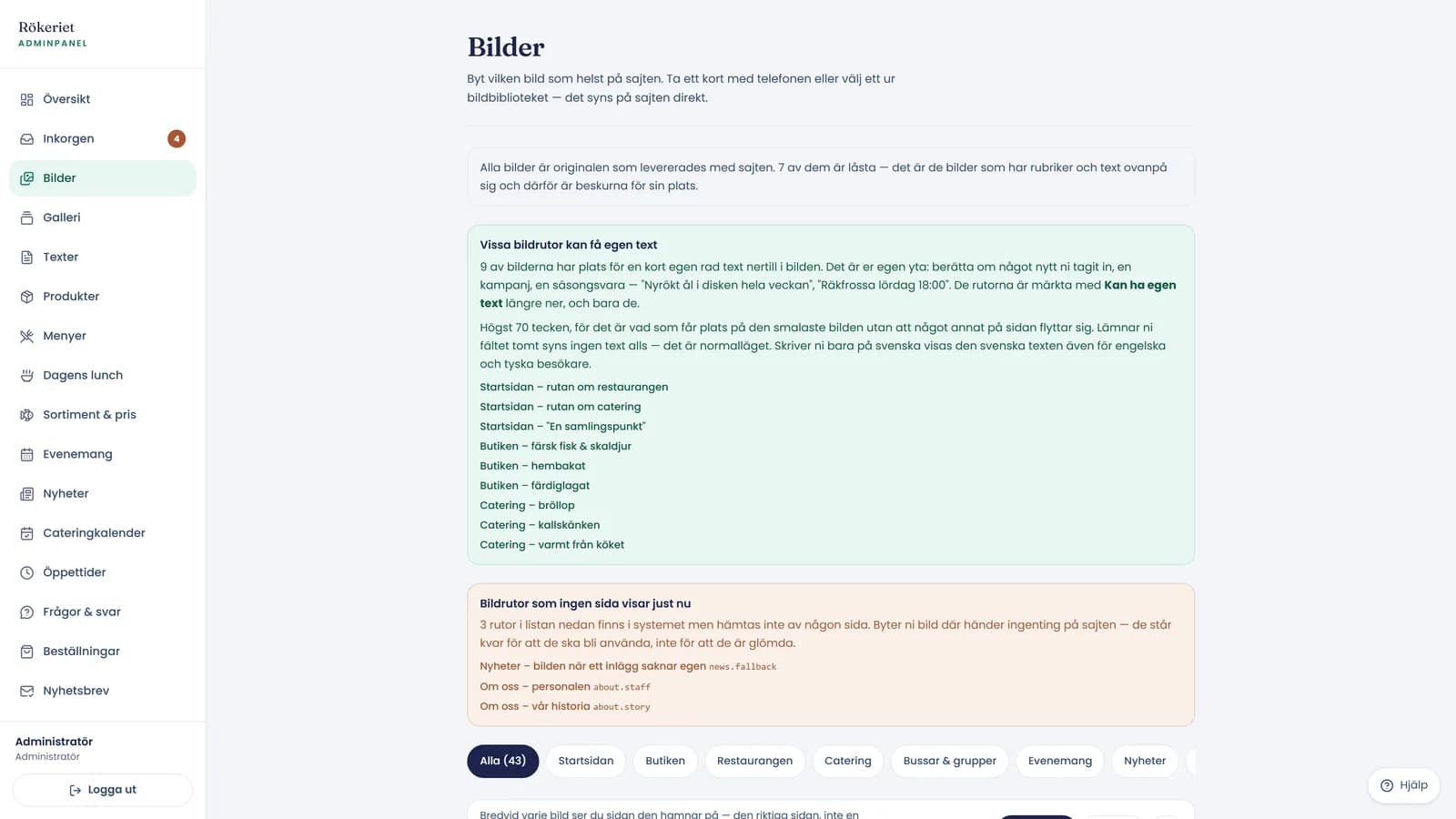
The panel: 26 modules, all of it editable from a phone
The panel is what Robin means when he says the site works like an Instagram account. Photos are swapped straight from the phone and appear on the site immediately. Texts, opening hours, menus, range, events, news, lunch week, catering, jobs, newsletter — every part of the site has a view of its own, 26 of them plus an overview that only shows what needs attention right now. Three roles — owner, fish counter and till — each see their own part, and a revoked permission takes effect on the next click.
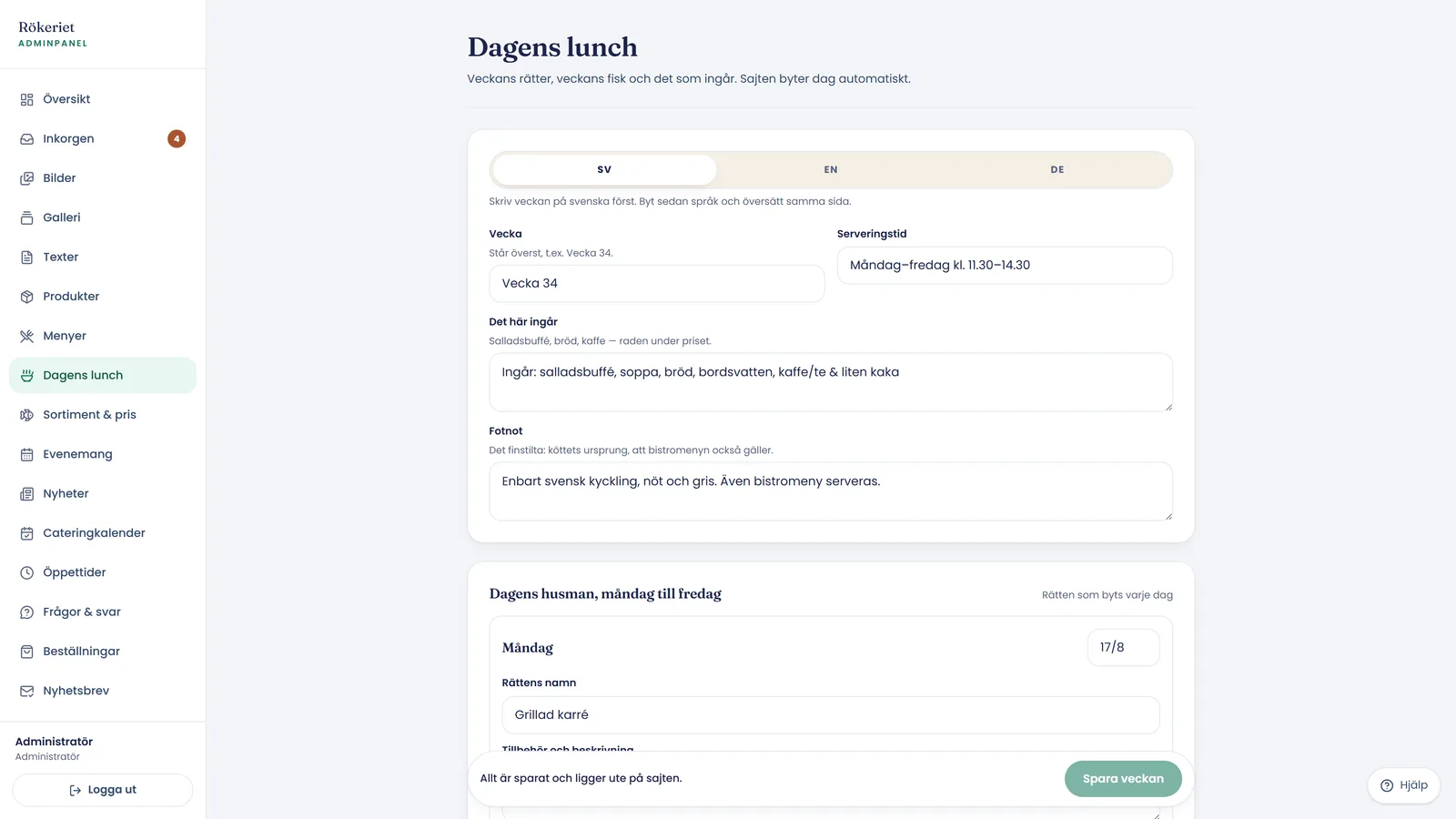
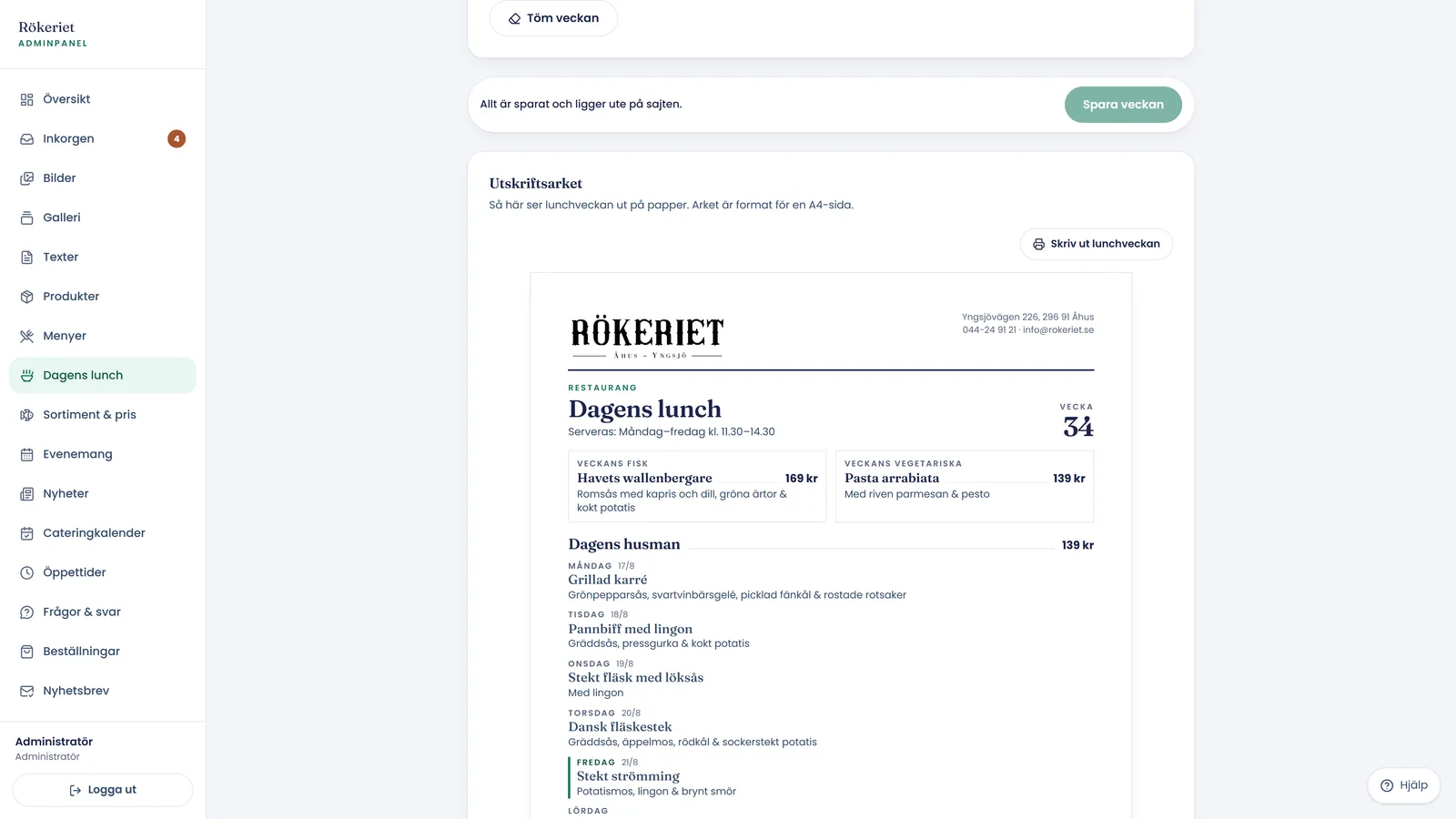
The printouts belong to the panel. The fish list, the menus, the lunch week and the Christmas menu are each measured to exactly one A4 sheet, stamped with who printed it and when, and carry a QR code the panel can re-point without reprinting the sheet.
AI that sticks to the truth
There are six AI features in the build, and all of them follow the same principle: the model never gets the last word on anything that costs money or could hurt someone.
- The guest chat answers in four steps — prepared answers, a portion calculator, search across the site’s content in three languages, and only then a language model. Phone numbers, email addresses and personal identity numbers are masked before anything leaves the EU.
- Allergens for the menus’ 75 dishes are suggested by the model but only published after the kitchen has approved them, with a name and a timestamp. Change the dish and the approval lapses.
- The catering price is calculated from the smokehouse’s own bookings, with no model involved. The AI only writes the reply email and cannot invent an amount.
- The help inside the panel can only answer with pages that actually exist — it points at an entry in a hand-written register, never at an invented link.
- Translation into English and German is done at the press of a button, and the panel keeps track of which fields have changed in Swedish since last time.
- Every AI call is booked against a monthly budget, so the cost is known in advance and can never run away.
Three languages
Åhus fills with tourists in summer, and German and English guests should be able to read the menu without guessing. So the whole site exists in three languages from day one — 28 page templates times three — and the panel shows the same page in all three, so a change is never left behind in just one of them.
In numbers
- 28 page templates × 3 languages — 98 pre-rendered pages
- 27 admin views, 3 roles
- 54 database tables
- 5 scheduled jobs: notifications, purging of personal data, page refreshes morning and evening, watching for stale translations
- 65 test scripts run before every delivery
- 252 redirects from the old address
- 4 weeks from the first line of code (18 August) to its own domain (14 September 2026)
All of it counted directly in the code on 16 September 2026 — not estimated.
Why this is what I do
Svensk Filterservice was the first client build; this is the largest. The same setup — a new site at a fixed price with AI built in from the start and operations included — but with three businesses in one. What I have learned about web shops without a payment gateway, daily lunches and bookings for restaurants, newsletters that actually get sent and pricing catering comes largely from here. The smokehouse is in Kristianstad municipality, and the guide on choosing a web agency in Kristianstad is written with this build behind it. What a build costs is listed openly under services, and who is behind it under about me.
Frequently asked questions
How long did the build take?
Four weeks from the first line of code to its own domain, with the site live on a temporary address after three. The content — prices, Latin names, catch details, menus, opening hours — was taken from the old site and the menu PDFs. Nothing was made up.
Does the smokehouse own the site?
Yes. Code, domain, database and customer list are theirs. I run it, but nothing is locked in with me, and if we stop working together they get a clean handover.
Can another smokehouse, restaurant or farm shop get the same?
Yes — the parts are built to be reused: the shop with weighed items, the lunch that switches day, the newsletter and the panel. What is unique to the smokehouse is the content and the photos, not the technology. What it costs depends on how many of the parts you need; the fixed prices are listed under services.
What does the AI actually do on the site?
Answers guests in the chat, drafts the weekly newsletter, suggests allergens the kitchen approves, writes reply emails to catering enquiries where the price is already calculated, and translates into English and German. It makes no decisions on its own.
Want something similar for your business?
Book a free 30-minute call and I’ll go through what you have today and what a build like the smokehouse’s would mean for you.
Book a free call →